

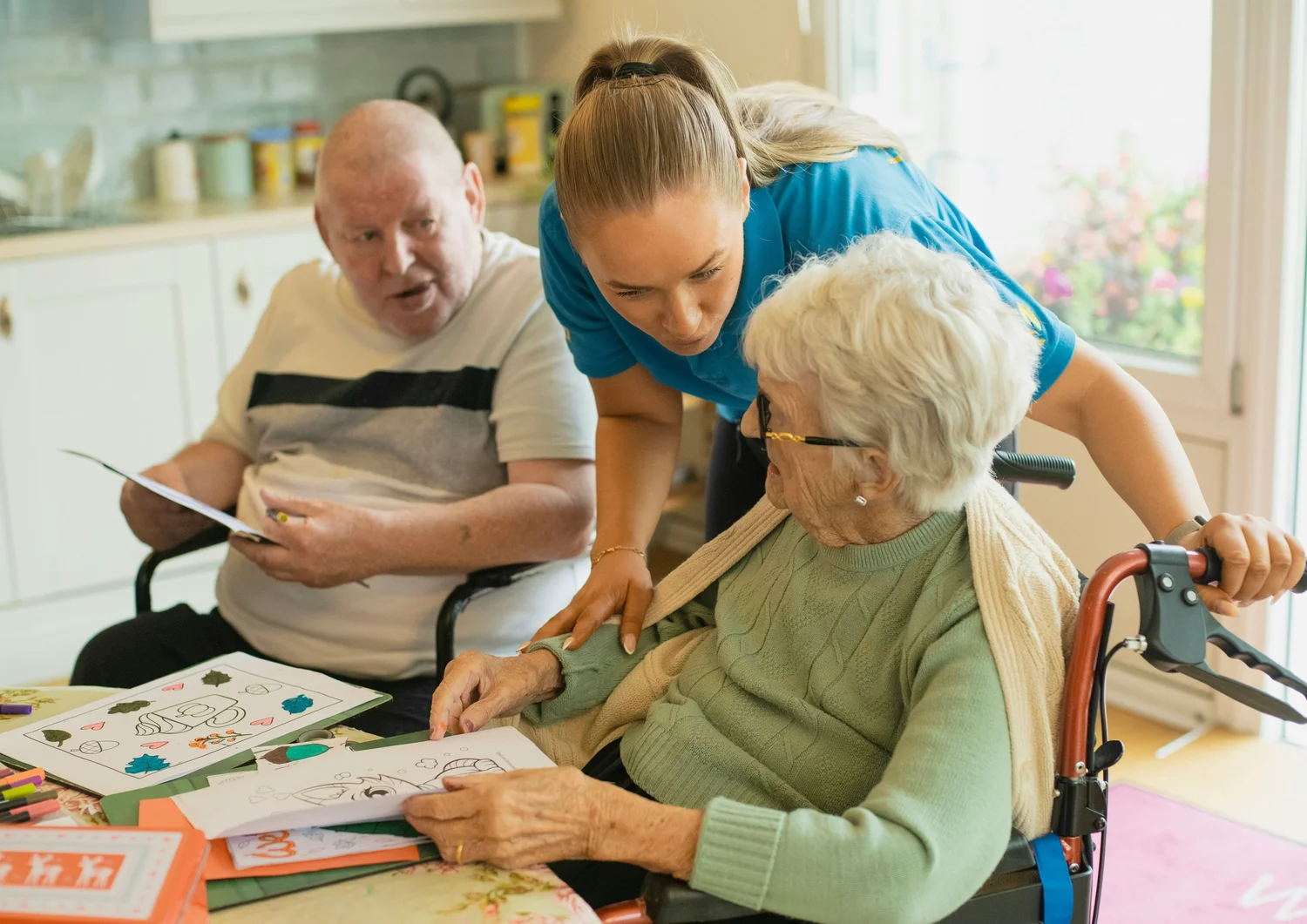
The difference in one minute
Home care provides non-medical assistance with everyday activities and routines. Home health care provides skilled clinical services ordered and overseen by an appropriate healthcare practitioner. Many San Diego families use both at the same time, especially after a hospital or rehabilitation stay.
Choose home care for ongoing non-medical help with personal care, meals, companionship and household routines.
Ask about home health care when a person needs skilled nursing, physical therapy, occupational therapy, speech-language pathology or another qualifying clinical service at home.
Home Care
- Bathing, dressing, grooming
- Meals and light housekeeping
- Companionship and routines
- Respite for family caregivers
Home Health Care
- Skilled nursing and monitoring
- Wound care and injections
- Physical and occupational therapy
- Clinical assessment and teaching
Home care and home health care side by side
| Question | Non-medical home care | Home health care |
|---|---|---|
| Primary purpose | Support everyday living, routine and independence | Treat or monitor a medical condition and provide skilled rehabilitation |
| Common providers | Home Care Aides and non-medical caregivers | Registered nurses, licensed vocational nurses, physical therapists, occupational therapists, speech-language pathologists and other clinicians |
| Typical services | Bathing, dressing, grooming, meals, companionship, light housekeeping, reminders and routine mobility support | Skilled nursing, wound care, injections, medication management, therapy, clinical assessment and medical teaching |
| How care begins | A family contacts an agency and completes a non-medical consultation and written service plan | A doctor or allowed practitioner orders or certifies qualifying care under a clinical plan of care |
| Schedule | Scheduled shifts based on the service plan and caregiver availability | Usually intermittent visits based on clinical need and coverage rules |
| Common payment | Often private pay or long-term care insurance; some public programs may help eligible people | Medicare, Medicare Advantage, Medi-Cal or private health insurance may cover qualifying services under plan rules |
| California oversight | Home Care Organizations and registered Home Care Aides are overseen by the California Department of Social Services | Home Health Agencies are healthcare providers subject to health-facility and payer requirements |
Coverage depends on individual eligibility, medical necessity, provider participation, authorization and plan rules. This table is a general comparison, not a coverage guarantee.
What non-medical home care can do
Non-medical home care is appropriate when a person needs practical assistance or supervision but does not need the caregiver to perform clinical tasks. A written service plan can include permitted assistance such as:
- Bathing, dressing, grooming and toileting assistance
- Companionship, conversation and activities
- Simple meal preparation and help with familiar mealtime routines
- Light housekeeping and laundry related to daily living
- Non-medical walking and routine transfer assistance when appropriate
- Verbal medication reminders, without administering, organizing or managing medication
- Respite that gives a family caregiver scheduled time away
- Routine updates to designated family contacts about completed tasks and non-clinical observations
California’s Home Care Services Consumer Protection Act requires Home Care Organizations to be licensed, and created a public registry for Home Care Aides who have completed applicable background-clearance requirements. Families can use the state’s resources to verify an organization or aide.
What home health care can do
Home health care addresses a medical or rehabilitative need. Depending on the clinical order and provider, services may include:
- Skilled nursing assessments and monitoring
- Wound care and dressing changes
- Medication management, injections or other skilled procedures
- Physical therapy after an illness, injury or surgery
- Occupational therapy focused on function and daily activities
- Speech-language pathology services
- Clinical education for the patient or family
For Medicare coverage, the person must meet the home health benefit requirements, including the need for qualifying part-time or intermittent skilled services, a practitioner-established plan of care, homebound status, and use of a Medicare-certified home health agency.
Why families often need both
A home health professional may visit a few times each week to provide nursing or therapy. That does not necessarily cover the hours when the person needs help preparing meals, bathing safely, getting dressed, following a familiar routine, or giving a family caregiver time to work and rest.
For example, after a hip procedure, a physical therapist may provide skilled exercises and evaluate progress. A non-medical caregiver may help with dressing, meals, light housekeeping and routine movement between therapy visits, but must not perform therapy or change the clinical plan. The two services complement each other when the roles stay clear.
Learn more about non-medical post-surgery and recovery support in San Diego, or see how our Hospital-to-Home Care helps in the first days after discharge.
Which service does your family need?
- Your parent needs help bathing, dressing or preparing meals
- A spouse or adult child needs scheduled respite
- Memory changes make familiar routines and supervision more important
- The person is isolated and would benefit from companionship
- Skilled visits are ending but daily non-medical help is still needed
- The family wants recurring help with everyday routines
- There is a wound, injection, catheter or other skilled nursing need
- A clinician recommends physical, occupational or speech therapy
- Medication requires clinical management rather than a simple reminder
- A new or worsening condition requires assessment or monitoring
- The family needs medical teaching or a clinical care plan
-
For emergencies Sudden confusion, chest pain, difficulty breathing, uncontrolled bleeding, signs of stroke or another possible emergency should not be directed to a non-medical home care agency. Call 911 or seek appropriate emergency medical care.
The terminology can be confusing
In California, a Home Care Aide generally provides non-medical services through a licensed Home Care Organization, or through a direct arrangement as an independent Home Care Aide. A home health aide working within a Medicare-certified home health episode is part of a clinical home health model. The similar titles do not make the services interchangeable.
The safest approach is to ask what tasks the worker is legally and professionally permitted to perform, who supervises the work, whether a clinical order is required, and how the service will be paid.
How payment usually differs
Non-medical home care is commonly paid privately. Long-term care insurance or certain public benefits may help some families, but eligibility and reimbursement depend on the specific policy or program. Original Medicare generally does not pay for custodial or personal care when that is the only care needed.
Qualifying home health care may be covered by Medicare, Medicare Advantage, Medi-Cal or private insurance, subject to medical necessity, eligibility, authorization, network and provider requirements. Coverage of a home health visit does not mean a plan will also pay for ongoing non-medical caregiver shifts.
Questions to ask any provider
Are you providing non-medical home care or licensed home health care?
The answer determines which tasks the organization may perform and how the service is paid.
Which tasks will your staff perform, and which are outside their scope?
Ask for the scope in writing so there is no ambiguity on the first day of care.
Are caregivers employees or independent contractors?
This changes who carries payroll, insurance and liability responsibility.
How are caregivers screened, trained, supervised and replaced when unavailable?
Ask specifically what happens when your scheduled caregiver calls out.
Is a doctor’s order or clinical certification required?
Home health generally requires one. Non-medical home care generally does not.
What does insurance or Medicare cover, and what will the family pay privately?
Get the hourly rate, any shift minimum, and the billing cycle before signing.
How will the written service plan or clinical plan of care be updated?
Needs change. Ask how quickly a plan can be revised and who authorizes it.
Who should the family call if needs change or an urgent concern arises?
You want a named contact and a clear after-hours process, not a general voicemail.
Frequently asked questions
Is home care the same as home health care?
No. Home care generally provides non-medical assistance with daily living, while home health care provides skilled clinical services under a medical plan of care.
Can a home care caregiver administer medication?
Better Choice Care caregivers may provide verbal medication reminders when included in the written service plan. They do not administer, organize, manage or make decisions about medication.
Can home care and home health visit on the same day?
Yes. Families may arrange both when each service is appropriate. The providers should understand their separate roles, and the non-medical caregiver must not perform skilled tasks assigned to the home health clinician.
Which one does Medicare cover?
Medicare may cover qualifying home health care when its eligibility and skilled-care rules are met. It generally does not cover ongoing non-medical personal or custodial care when that is the only care needed.
What does Better Choice Care provide?
Better Choice Care LLC provides scheduled non-medical home care, including personal care assistance, companionship, respite, meal preparation, light housekeeping and support with documented daily routines. It is not a home health agency and does not provide nursing, therapy, wound care, injections, clinical assessments or medication administration.